
Whole House Audio Systems: Music in Every Room
A whole house audio system lets you enjoy music, radio, podcasts and other audio throughout your home. Listen to the same playlist in every room, or choose different audio for separate areas. With thoughtful planning, the system can be easy to use, discreetly installed and tailored to the way you live.
What is a whole house audio system?
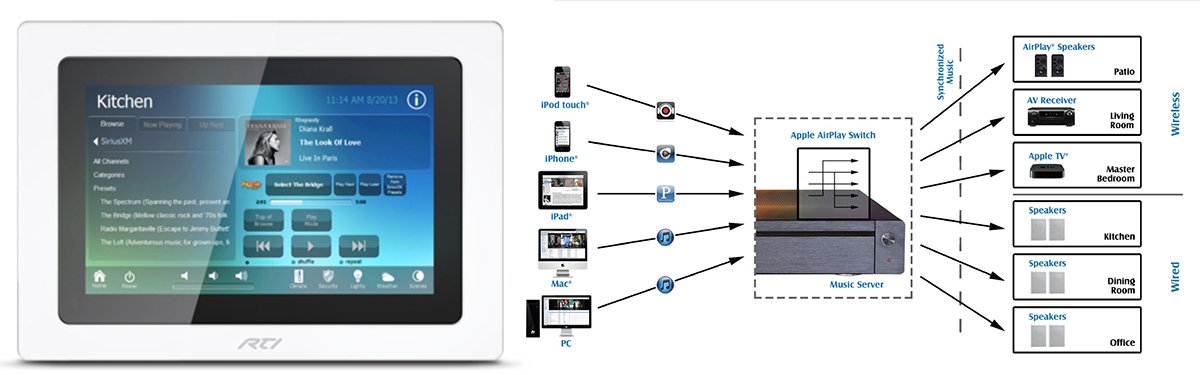
A whole house audio system connects speakers in different rooms to one or more audio sources. You can control what plays, where it plays and how loud it is, usually through a mobile app, wall-mounted control panel or a combination of controls.
The rooms or areas you can control separately are known as zones. A zone might be a single room, a group of rooms or an outdoor area. For example, you could play a podcast in the kitchen while someone else listens to music in the lounge.
How does it work?
A typical system includes speakers, amplification, audio sources and a control method. Depending on the design, these components may be centralised in one location or built into individual rooms.
- Speakers: In-ceiling and in-wall speakers provide a discreet finish, while bookshelf and floor-standing speakers can make a feature of the sound system. Weather-resistant models are available for suitable outdoor locations.
- Amplification: An amplifier provides power to the speakers. Some systems use a central amplifier, while others use wireless or networked speakers with amplification built in.
- Audio sources: These may include streaming services, internet radio, televisions, turntables or music stored on a device or network.
- Controls: Apps, voice assistants and physical controls can all play a part. Wall controls can be useful when a phone is not to hand.
Wired or wireless?
Both wired and wireless systems can work well. The right option depends on your home, the rooms involved and the level of flexibility you want.
Wired systems
Wired systems use speaker cables and, in some designs, network cables. They are often considered for new builds or renovations, when cables can be installed before walls and ceilings are finished. A planned wired installation can provide a reliable connection and keep equipment out of sight, although it may require more building work if added to an existing home.
Wireless systems
Wireless speakers connect over your home network, which can make them easier to add to an existing property. You can often begin with one room and expand the system over time. Performance depends partly on the strength and reliability of the home network, so Wi-Fi coverage should be considered during planning.
Some systems combine wired and wireless equipment. This can be a practical way to use discreet built-in speakers in key rooms while keeping the option to add portable speakers elsewhere.
Choosing the right rooms and zones
Start by thinking about how you use your home. You may want background music in the kitchen and dining area, focused listening in a lounge, or audio in a home office. Bathrooms and outdoor spaces can also be included, provided the equipment is suitable for the environment.
Consider whether adjoining rooms should share a zone or be controlled independently. Combining spaces can make everyday use simpler, while separate zones offer more choice. The best arrangement depends on how often people use the rooms at the same time.
Sound quality and speaker placement
Good sound depends on more than the speakers themselves. Room size, shape, furnishings, ceiling height and listening position all affect the result. A pair of well-placed speakers may be ideal in one room, while another space may benefit from additional speakers to provide more even coverage.
In-ceiling speakers are popular for background listening because they keep floors and shelves clear. For more involved listening, consider speaker positioning, stereo coverage and the acoustic characteristics of the room. In a kitchen or bathroom, choose equipment designed for the conditions, including exposure to moisture where relevant.
Control and ease of use
A system should be straightforward for everyone in the household to operate. An app can provide access to sources, rooms and volume settings, while a wall-mounted control can offer a quick alternative. If you use a voice assistant, check that the system supports the functions you want and that the setup suits your privacy preferences.
It is also worth considering how the audio system might work alongside other home technology, such as a television, lighting controls or a smart home platform. Compatibility varies, so confirm what can be integrated before making a decision.
Planning a whole house audio installation
Careful planning helps avoid inconvenient controls, poor coverage and costly changes later. Before choosing equipment, make a list of the rooms you want to include, the sources you use and the way you would like to control the system.
- Decide which rooms should have audio and whether they need separate zones.
- Think about built-in, freestanding or wireless speakers in each space.
- Check that your home network can support the proposed system.
- Plan where amplifiers, network equipment and other components will be located.
- Consider cable routes and speaker positions, particularly during building or renovation work.
- Allow for future expansion if you may want to add rooms later.
For an existing home, an installer can assess the property and explain the available options, including how to minimise visible cables and disruption. For a new build or renovation, involving an AV specialist early can make it easier to plan cabling, equipment locations and controls before the finishing work begins.
Is a whole house audio system right for you?
A whole house audio system can suit anyone who wants convenient access to audio in more than one part of the home. It can provide simple background music, independent listening in different rooms or a more considered setup for enjoying music in dedicated spaces.
The best system is not necessarily the most complicated. Start with the rooms and features that matter most, then choose equipment and controls that fit your home and budget. With the right planning, whole house audio can make listening more enjoyable and convenient, day after day.
Essential Tips for Designing an Effective Whole House Audio System
- Plan speaker locations before decorating.
- Choose wired speakers for reliable sound.
- Use wireless systems where cabling is impractical.
- Check each room can play audio independently.
- Match amplifiers to speaker power requirements.
- Consider acoustic treatment in echo-prone rooms.
Plan speaker locations before decorating.
Plan speaker locations before decorating, especially if you’re considering in-ceiling or in-wall models. Decide which rooms need sound, where speakers will provide even coverage and how cables can be routed discreetly. Sorting this out before painting, plastering or fitting new ceilings can help avoid visible wiring, extra building work and costly changes later.
Choose wired speakers for reliable sound.
For reliable sound throughout your home, consider choosing wired speakers. A direct cable connection avoids relying on Wi-Fi for the audio signal, helping to provide consistent playback and reduce dropouts caused by network congestion or weak coverage. Wired speakers can be especially practical in new builds and renovations, when cables are easier to install discreetly.
Use wireless systems where cabling is impractical.
When running cables through walls or ceilings is impractical, wireless speakers can be a flexible way to bring audio into your home. They connect over your Wi-Fi network, helping you add music to existing rooms without major building work, and can often be moved or expanded as your needs change. Check that your network provides reliable coverage wherever you plan to listen, as a strong connection helps keep playback smooth.
Check each room can play audio independently.
Check that each room can play audio independently, so everyone can enjoy their preferred music, radio or podcast without affecting other areas of the home. This is particularly useful when different people are using separate rooms at the same time. Ask your installer how the system handles separate zones, sources and volume controls, and make sure these are simple to manage through the app or wall controls.
Match amplifiers to speaker power requirements.
Match your amplifiers to the power requirements of your speakers to achieve clear, reliable sound. Check each speaker’s recommended power range and impedance, then choose an amplifier that can drive the speakers comfortably without being underpowered or delivering excessive power. If you’re unsure how the specifications work together, ask an AV professional to check the system design before installation.
Consider acoustic treatment in echo-prone rooms.
In echo-prone rooms, such as spaces with hard floors, bare walls or high ceilings, acoustic treatment can make whole house audio sound clearer and more comfortable. Soft furnishings, rugs and curtains help absorb reflections, while purpose-designed acoustic panels can offer a more targeted solution. Even modest changes may reduce echo and improve speech and music clarity, helping your speakers perform at their best.
Related Posts

Mastering the Art of Video Content Creation: A Guide for Digital Success
The Power of Video: Shaping Our Digital World The Power…

Elevate Your Event with Professional Event Audiovisual Hire Services
Event Audiovisual Hire: Enhancing Experiences with Cutting-Edge Technology In the…
Unlocking the Potential: Exploring the Evolution of Screen Technology
The Evolution of Screens: From Cathode Ray Tubes to OLED…