
How an SEO Audit Company Can Improve Your Website’s Performance
A website can look polished and still struggle to attract visitors from search engines. Technical issues, weak content, poor page structure or a lack of relevant links can all make it harder for potential customers to find you. An SEO audit company helps identify these obstacles and provides practical recommendations to improve your website’s visibility, usability and performance.
What is an SEO audit?
An SEO audit is a detailed review of how well a website is prepared for organic search. It looks at the factors that affect how search engines discover, understand and rank your pages, as well as the experience people have when they visit your site.
The findings are usually presented in a report that prioritises issues and sets out recommended actions. Rather than simply listing problems, a useful audit explains why they matter and how they can be addressed.
What does an SEO audit company review?
The scope of an audit depends on the website, its goals and the level of support required. A thorough review may cover the following areas:
- Technical SEO: Site speed, mobile usability, crawlability, indexation, redirects, broken links, XML sitemaps and robots.txt settings.
- On-page SEO: Page titles, meta descriptions, headings, image alt text, internal links and the use of relevant search terms.
- Content quality: Whether pages are useful, accurate, original and aligned with what visitors are looking for.
- Site structure: How pages are organised and whether visitors and search engines can find important content easily.
- Backlink profile: The quality and relevance of websites linking to yours, alongside any potentially harmful patterns.
- Local SEO: Business listings, location pages and other signals that can help a company appear in local searches.
- Competitor visibility: How your search presence compares with relevant competitors and where opportunities may exist.
Why commission an SEO audit?
Search performance can decline for many reasons, and the cause is not always obvious. A structured audit can help you understand what is holding a website back and decide which improvements should come first.
For example, an audit may reveal that important pages are not being indexed, that duplicate content is creating confusion, or that visitors are landing on pages that do not meet their needs. Addressing these issues can support better organic visibility and a more effective user journey.
An audit can also be valuable before a website redesign, after a significant drop in traffic or when a business is planning to expand into new services or locations. Reviewing SEO early can help prevent avoidable problems and protect the value of existing content.
What to expect from the audit process
Every provider has its own approach, but a well-managed SEO audit commonly follows several stages:
- Understanding your goals: The company learns about your business, audience, services and priorities.
- Collecting information: The auditor reviews the website and, where appropriate, uses analytics and search performance data.
- Analysing the findings: Technical, content and search visibility issues are assessed in context.
- Prioritising recommendations: Actions are grouped by importance, potential impact and level of effort.
- Presenting the results: You receive a report, presentation or consultation explaining what was found and what to do next.
The most useful recommendations are specific to your website. A generic checklist may identify common issues, but it will not always explain which changes are likely to make the greatest difference for your organisation.
How to choose an SEO audit company
Choosing the right provider is about more than comparing prices. Look for a company that can explain its process clearly and connect its recommendations to your business objectives.
- Ask what the audit includes. Confirm whether it covers technical SEO, content, links and local search where relevant.
- Look for clear, prioritised advice. Recommendations should be understandable to both marketers and developers.
- Check how findings are explained. A good provider should be able to discuss the evidence behind its conclusions.
- Discuss implementation support. Find out whether the company can help put changes into practice or work with your existing team.
- Be cautious of guarantees. No company can guarantee a particular ranking, as search results depend on many changing factors.
- Ask about reporting and follow-up. An audit is more useful when there is a clear plan for measuring progress.
What happens after an SEO audit?
An audit is a starting point, not a result in itself. Once the recommendations have been prioritised, your team can work through them in stages. Some fixes, such as correcting broken links or updating page titles, may be straightforward. Others, such as restructuring a large website or improving a substantial content library, may require more planning.
Progress should be measured against meaningful indicators, such as organic traffic, search visibility, qualified enquiries, sales or engagement with key pages. These measures help show whether the work is contributing to your wider business goals.
Make informed decisions about your SEO
A reputable SEO audit company can provide an independent view of your website and a practical route towards improvement. By identifying technical barriers, content gaps and opportunities, an audit gives you a clearer basis for deciding where to invest your time and resources.
Whether you run a small local business or manage a larger website, a tailored audit can help turn SEO from guesswork into a considered, measurable part of your digital strategy.
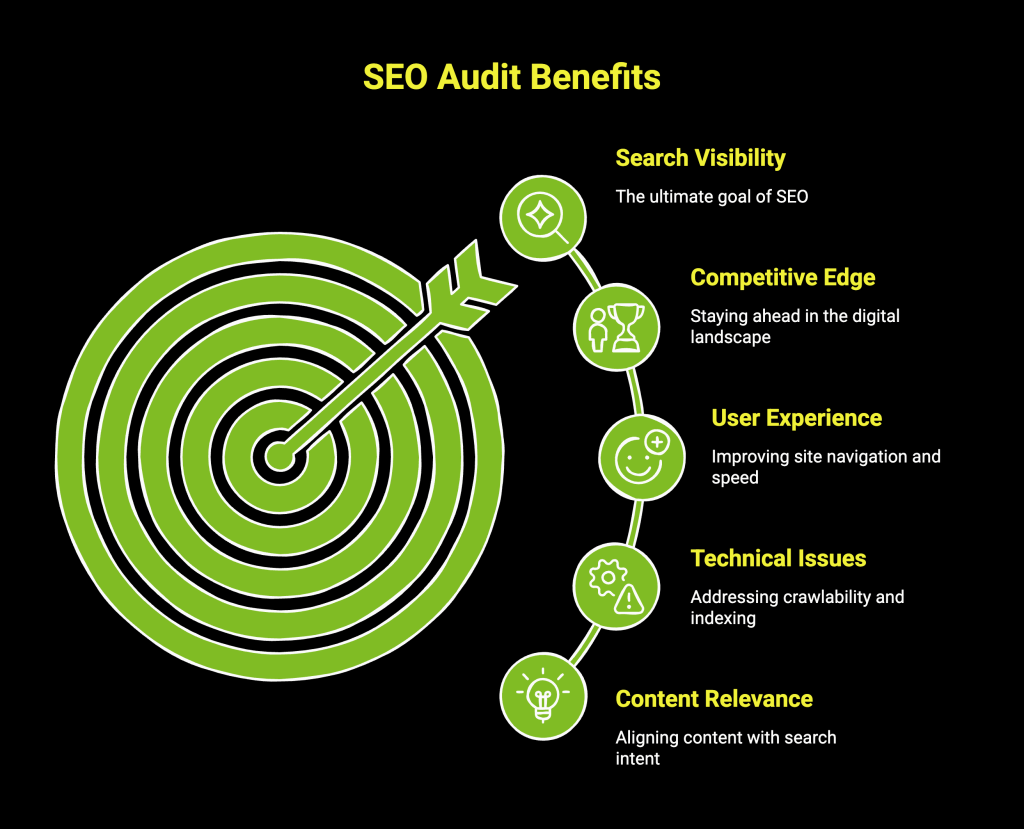
5 Benefits of Using an SEO Audit Company
- Identifies technical SEO issues.
- Highlights content improvement opportunities.
- Helps prioritise SEO tasks.
- Supports better search visibility.
- Provides a clearer action plan.
7 Drawbacks of Hiring an SEO Audit Company
- Can be costly for small businesses.
- Audit quality varies between providers.
- Recommendations may be overly generic.
- Some reports use confusing jargon.
- Fixing issues may require extra costs.
- Results can take time to appear.
- SEO ranking guarantees are unreliable.
Identifies technical SEO issues.
An SEO audit company can uncover technical issues that may prevent search engines from crawling, indexing or ranking your website effectively. This can include broken links, slow-loading pages, mobile usability problems, duplicate content, redirect errors and incorrect sitemap settings. By identifying and prioritising these issues, an audit helps you understand what needs fixing and gives your team a clear starting point for improving your site’s search performance and user experience.
Highlights content improvement opportunities.
An SEO audit company can identify where your website content could work harder. By reviewing how well pages match search intent, use relevant keywords and provide useful information, it can highlight outdated content, missing topics and pages that need clearer structure. These insights help you prioritise improvements that make your content more valuable to visitors and easier for search engines to understand.
Helps prioritise SEO tasks.
An SEO audit company helps you prioritise tasks by identifying which issues are most important and likely to have the greatest impact on your website. Rather than trying to fix everything at once, you receive clear, ordered recommendations based on factors such as urgency, potential benefit and the effort involved. This makes it easier to focus your time and budget on the changes that matter most, while building a practical plan for longer-term SEO improvements.
Supports better search visibility.
An SEO audit company can help improve your website’s visibility in search results by identifying issues that may be preventing pages from being found, understood or ranked effectively. Its recommendations may cover technical performance, page content and site structure, helping you focus on changes that make it easier for search engines and potential customers to discover your business.
Provides a clearer action plan.
An SEO audit company turns complex website data into a clear, prioritised action plan. Rather than leaving you with a list of technical issues, it explains which improvements matter most, why they are important and how they can be addressed. This helps your team focus its time and budget on practical steps that support your website’s search performance and business goals.
Can be costly for small businesses.
One potential drawback of hiring an SEO audit company is the cost, which can be difficult for small businesses to absorb, particularly when budgets are tight. A thorough audit may require specialist expertise and tools, and the fee can be higher than expected if the website is large or complex. Before committing, compare providers, check exactly what the audit includes and make sure the recommendations are practical for your budget and resources.
Audit quality varies between providers.
One potential drawback of using an SEO audit company is that the quality of audits can vary considerably between providers. Some deliver a thorough, tailored analysis with clear, prioritised recommendations, while others rely on automated tools or generic checklists that may miss important issues or offer little practical guidance. Before choosing a provider, ask what the audit includes, how its findings are checked and whether the recommendations will be explained in the context of your business goals.
Recommendations may be overly generic.
One potential drawback of working with an SEO audit company is that its recommendations may be overly generic. If the audit relies on automated tools or a standard checklist, it may offer familiar advice without taking enough account of your website, industry, audience or business goals. This can leave you unsure which changes matter most or how to put them into practice. Before choosing a provider, check that its findings will be tailored to your site and include clear, prioritised actions.
Some reports use confusing jargon.
Some SEO audit reports are packed with technical jargon, making it difficult to understand what the findings mean or which actions to take. If recommendations aren’t explained in clear, practical language, business owners may struggle to prioritise fixes or brief their web team. A good SEO audit company should translate complex issues into straightforward advice, explain why each change matters and distinguish urgent fixes from longer-term improvements.
Fixing issues may require extra costs.
One potential drawback of working with an SEO audit company is that fixing the issues it identifies may involve extra costs. While the audit itself highlights areas for improvement, implementing recommendations could require developer support, new content, technical changes or ongoing SEO work. It’s worth asking which fixes are included in the quoted fee and requesting a prioritised action plan, so you can budget for essential improvements and tackle other changes over time.
Results can take time to appear.
One potential drawback of working with an SEO audit company is that results can take time to appear. An audit can identify issues and recommend improvements, but implementing changes and seeing their effect in search rankings is rarely immediate. Search engines need time to recrawl and reassess a website, while factors such as competition and the scale of the work can also affect progress. For this reason, SEO should be viewed as a long-term investment, with performance monitored over time rather than judged solely on quick results.
SEO ranking guarantees are unreliable.
Be cautious of SEO audit companies that guarantee specific rankings. Search results are influenced by many factors, including competitors, location and ongoing changes to search engine algorithms, so no provider can reliably promise a particular position. A trustworthy company will explain what it can control, set realistic expectations and focus on sustainable improvements—such as better technical performance, useful content and increased relevant organic traffic—rather than making claims it cannot guarantee.
Related Posts

Unlocking the Potential of Search Engine Optimization Marketing
Search Engine Optimization Marketing The Power of Search Engine Optimization…

Elevate Your Legal Practice with Expert Attorney SEO Marketing Strategies
Attorney SEO Marketing: Boosting Your Online Presence Attorney SEO Marketing:…

Maximise Your Website’s Visibility: Strategies to Increase SEO Ranking
How to Increase SEO for Your Website Increasing SEO: A…